
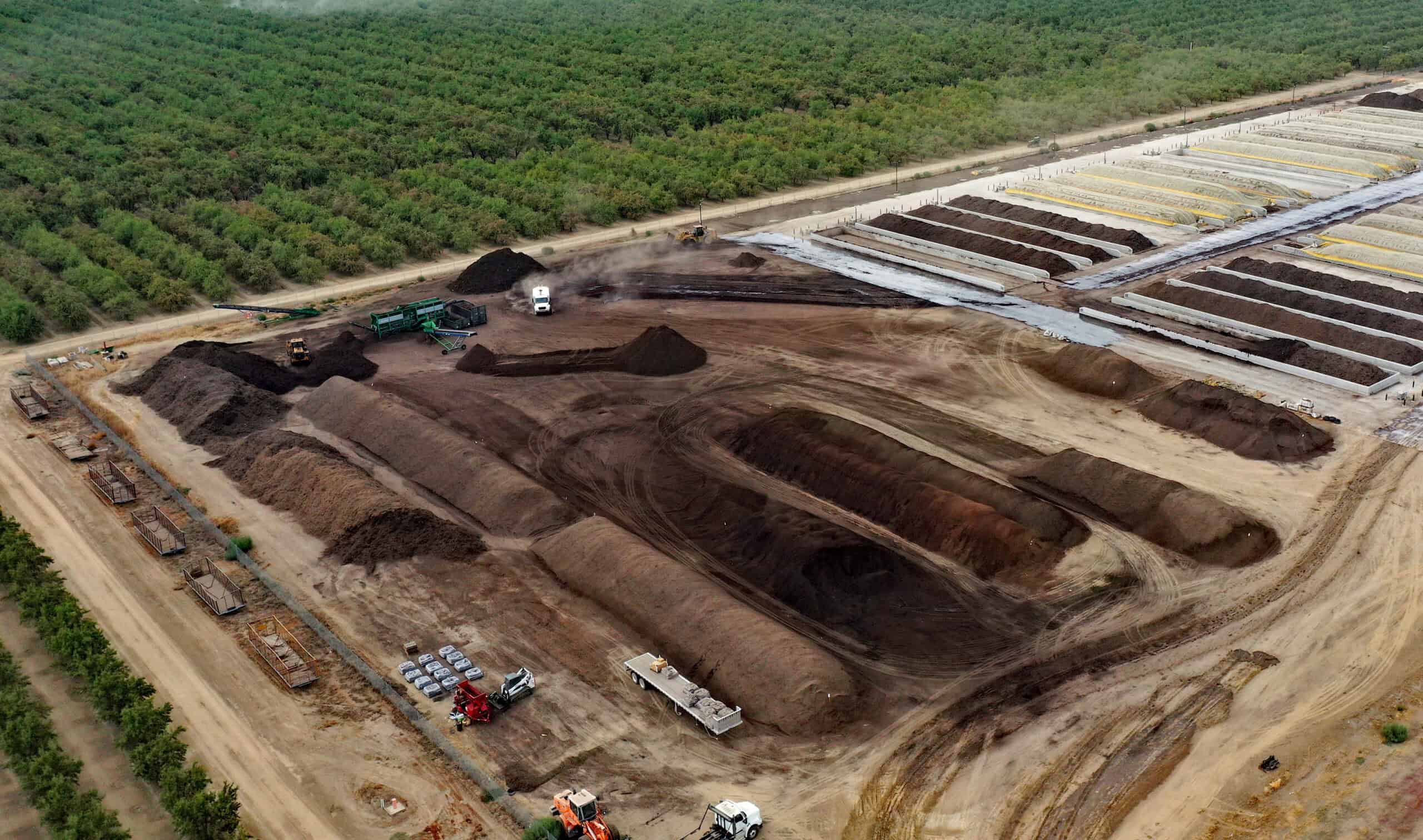
Agromin, California’s largest organics recycler, has entered into an agreement with Kern County Public Works (Kern County) to market compost and wood mulch generated from Kern County’s solid waste facilities.
Kern County operates the Shafter-Wasco Composting Facility, which produces compost products made from locally generated organic waste. Kern County operates 11 solid waste facilities that manufacture wood mulch products from materials such as brush and lumber.
Under the agreement, Agromin will market the finished materials to targeted commercial and agricultural users in and outside Kern County boundaries. Agromin will use an online customer portal to manage orders and deliveries.
“This partnership with Agromin strengthens Kern County’s ability to maximize the beneficial use of compost and mulch generated from our solid waste facilities,” said Joshua Champlin, Director of Kern County Public Works. “By expanding market opportunities for these products, we are supporting local agriculture, improving soil health, advancing sustainability efforts, and helping the County meet the requirements of SB 1383. We are committed to turning organic waste into a valuable resource that benefits our communities and the environment.”
The Shafter-Wasco Composting Facility receives up to 100,000 tons of organic materials annually and produces an estimated 30,000 to 50,000 tons per year of compost products. Kern County's wood mulch program is estimated to produce between 25,000 and 35,000 tons per year.
“We’ll seek out end users in commercial and local agriculture with the goal of finding a home for most of the compost and mulch that Kern County produces,” says Bill Camarillo, Agromin CEO. “The materials will also be used to beautify community landscapes, support soil health, conserve water and restore land in post-wildfire areas.”
Kern County and other California jurisdictions are required under SB 1383 to keep 75 percent of generated organic materials and food waste out of landfills. Jurisdictions must then distribute the products made from the waste (compost, mulch and biogas) through residential giveaways, compost use in agriculture, and other local end-user channels.
“Kern County already has a significant organics recycling system in place that produces quality compost and mulch,” says Camarillo. “As is the case with most jurisdictions, the challenge the County faces is how to distribute thousands of tons of these products each year in a way that is sustainable and beneficial to the county and its residents, and that meets state legal mandates.”
Kern County Public Works
Kern County Public Works is a department of the County of Kern and is responsible for the planning, design, construction, maintenance, and operation of roads, bridges, traffic signals, sanitary landfills, and publicly owned facilities. Kern County Public Works strives to provide quality public services including road permit inspection, building permit inspection and plan check, code compliance, engineering and surveying review of proposed land development, solid waste and hazardous waste disposal, wastewater treatment, public transportation, and community outreach, which serve to protect and enhance the lives of the people of Kern County. For more information, visit www.kernpublicworks.com and follow us on Facebook and Instagram @kerncountypublicworks.
Agromin
Agromin is California's largest organics recycler and a leader in circular economy solutions. Through organic waste collection and processing, soil product manufacturing, environmental consulting services and carbon credit development, Agromin transforms organic waste into valuable environmental and economic resources. Operating 21 facilities and serving more than 200 California communities, the company currently manages more than 1.25 million tons of
organic material annually. As jurisdictions and states expand their focus on organic waste diversion and climate initiatives, Agromin advises public agencies on the development and implementation of compliant collection, recycling and beneficial reuse programs. By integrating production, logistics, distribution and regulatory expertise, Agromin helps communities achieve environmental goals while creating long-term economic value. The company is pursuing a long-term vision of managing 10 million tons of organic material annually within the next 10 years. www.agromin.com